


BELLADONNA OF SADNESS
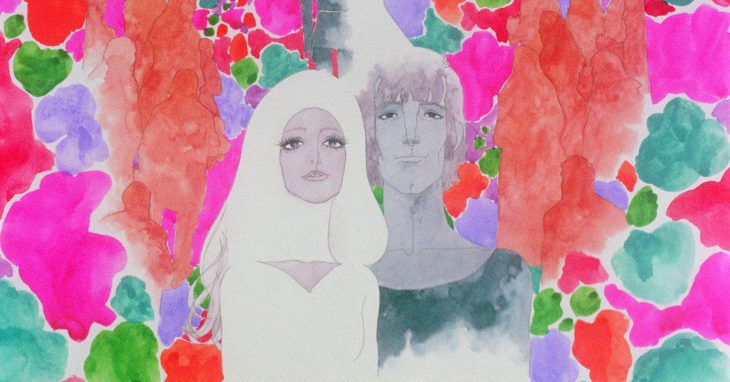
If you picture animation cinema as diverse flora, Eiichi Yamamoto’s masterpiece “Belladonna of Sadness” would be the rarest of flowers. The third and last part of the “Animerama” trilogy, that focuses on mature content, tells the story of Jeanne a newly wed farmer’s wife, who is raped by an aristocrat and then haunted by a phalloid demon: She is to seek revenge for her own desecration. Yamamoto based his legendary obscure Anime on Jules Michelet’s non fiction work “La Sorciére”: The (probable) witchcraft in both works is described as a appropriate and popular rebellion against the church and feudal rulers‘ oppression. „Belladonna of Sadness“ is a radically subversive feminist fantasy, whose outrageous combination of explicit sexuality and violence has not to this day lost any of its transgressive potential. The pictures, often painted with watercolors and brought to life with tracking shots, lead again and again to frenetic rhythmic and excessively loaded color- and form-orgies, not only letting you comprehend but actually feel Jeanne’s emancipation of all her oppressors. “Belladonna of Sadness” is an infinitely fascinating, vibrant gem and one of the big masterpieces of animated cinema – and of the fantastic film.
Eiichi Yamamoto (*1940 in Japan) ist ein japanischer Regisseur und Drehbuchautor. 1961 gründet er mit Osamu Tezuka die Produktionsfirma Mushi Productions, die mit den Fernsehserien ASTRO BOY und KIMBA, DER WEISSE LÖWE weltweite Erfolge feiert. 1969 gibt er mit A THOUSAND AND ONE NIGHTS, dem ersten Teil der Animerama-Trilogie sein Langfilm-Debüt. 1970 folgt CLEOPATRA, 1973 BELLADONNA OF SADNESS.
Mo, 26.09. | 18:00 – Filmcasino

